- Bowen's Newsletter
- Posts
- BNT: Weekly Wellness #007
BNT: Weekly Wellness #007
Creatine 101: What Everyone Should Know

Bowen Naylor
July 28, 2025

Creatine 101: What Everyone Should Know
✅What is Creatine?💊
Creatine is something that our body naturally makes. We also get creatine from food such as red meat. Recently scientists have discovered that taking extra creatine along with what we make and eat has many benefits. Creatine is a main ingredient in phosphocreatine, one of the body’s main energy sources during resistance training such as squats or push-ups1 . Phosphocreatine is also used as an energy source for the brain and nervous system. The extra supplemented creatine can help you recover faster, increase hormone production, and even pull water into muscle cells causing you to be better hydrated.
✅How Does Creatine Help You Reach Your Goals? 🥅
Creatine is my second favorite supplement behind protein powder. Creatine is one of the few supplements you take and can feel a noticeable difference. According to one study creatine intake increased muscle mass and strength substantially when compared with a placebo group3 . From my experience you can typically see a two to five pound increase in muscle mass and 10%-15% increase in strength after a couple weeks of supplementation. That’s a huge benefit considering all you have to do is remember to take a powder every day.
✅What Creatine Does Away from Your Workouts? 📖
Creatine is now being studied for its benefits of brain function. Since the brain also requires creatine, the extra surplus seems to benefit short term memory, nerve protection and even reasoning skills. A very recent study looked at creatine as a way to slow down forms of Dementia such as Alzheimer’s. It found that in almost every test the patients taking creatine outperformed the ones who were not using the supplement2 . This study has shown lots of promise in the future of creatine.
✅What Are the Negatives to Taking Creatine? 📉
When creatine first came out it was bashed. Mostly because it performed so well that people wanted to call it an illegal drug. However, it has been proven time and time again that it is very safe. People with preexisting diseases such as kidney disease or liver disease should consult a doctor first, but for a healthy individual there are not any downsides to creatine. The only downside in my life is remembering to take it every day. Pricing should be considered as well but when compared to most supplements it is pretty cheap.
✅How to Supplement With Creatine? 🤔
Creatine Monohydrate: When in the store or searching online, look for the word’s Creatine Monohydrate. That is what you want, be skeptical of anything else. Creatine monohydrate has all the data to back it up.
Dosages: For benefits of muscle and strength gain the golden number is 5 grams of creatine everyday(even rest days). Most of the studies that look at benefits around the brain use 15, 20, even 30 grams of creatine. If that’s something that interests you, I would start at 5 grams and work my way up. I tend to take around 7-10 grams per day.
Timing: People have argued lots about when to take creatine. Some say that it works best right before or after your workout. However, what is most important to me is that you can fit it into your routine and take it every day.
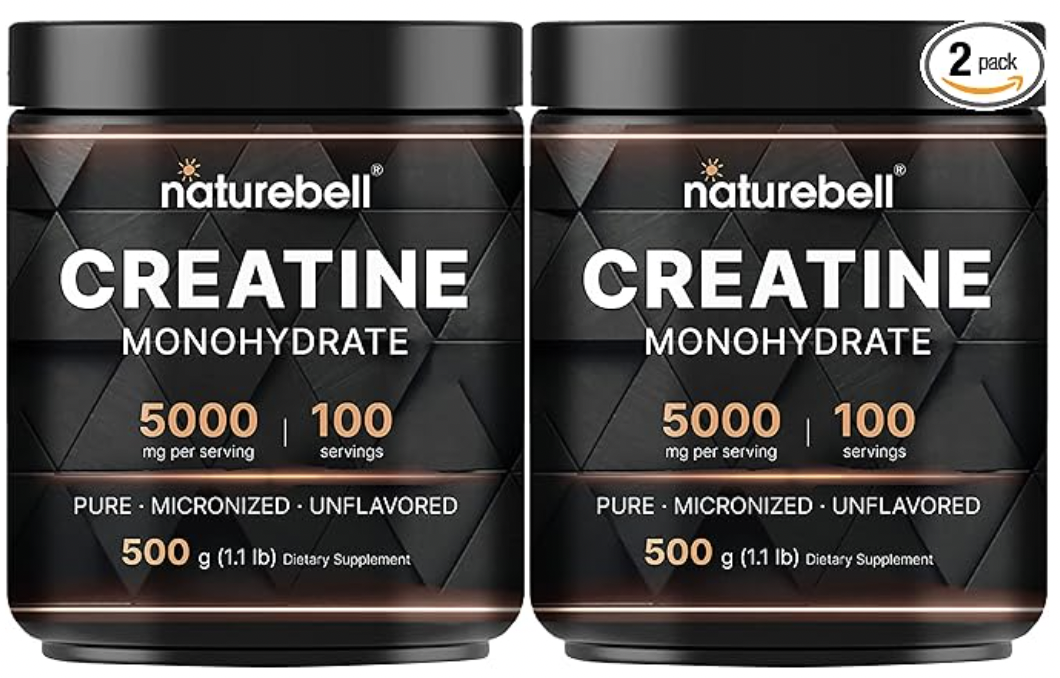
Below I have attached the creatine that I take if anyone is interested!
1 Creatine. Cleveland Clinic. (2025, June 30). https://my.clevelandclinic.org/health/treatments/17674-creatine
2 Smith, A. N., Choi, I.-Y., Lee, P., Sullivan, D. K., Burns, J. M., Swerdlow, R. H., Kelly, E., & Taylor, M. K. (2025, May 19). Creatine monohydrate pilot in alzheimer’s: Feasibility, brain creatine, and cognition. Alzheimer’s & dementia (New York, N. Y.). https://pmc.ncbi.nlm.nih.gov/articles/PMC12089086/#trc270101-sec-0190
3 Volek, J. S., Duncan, N. D., Mazzetti, S. A., Staron, R. S., Putukian, M., Gómez, A. L., Pearson, D. R., Fink, W. J., & Kraemer, W. J. (1999). Performance and muscle fiber adaptations to creatine supplementation and heavy resistance training. Medicine and science in sports and exercise, 31(8), 1147–1156. https://pubmed.ncbi.nlm.nih.gov/10449017/